Article | 21 April 2026
Emergency Preparedness Measures in the Energy Sector – Who Bears the Cost?
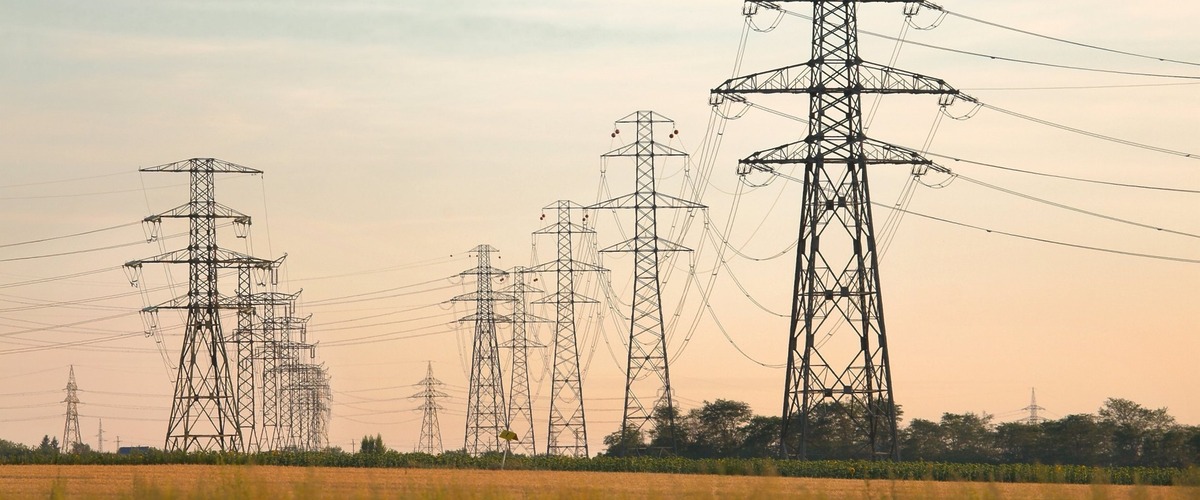
Electricity supply is among society’s most critical functions and a natural focal point for emergency preparedness efforts. But who bears the cost when companies in the electricity sector take measures to strengthen their preparedness? In this article, we comment on the legal framework governing compensation for emergency preparedness measures in the energy sector, both those mandated by Svenska kraftnät and those undertaken by companies on their own initiative.
Background
The security landscape in Europe has undergone a fundamental shift since Russia’s invasion of Ukraine in 2022. As a result, questions of civil defence and societal preparedness have gained renewed relevance. The war in Ukraine has particularly demonstrated how vulnerable the energy sector is. Electricity systems and other critical infrastructure have been repeated targets of military attacks, and the lessons drawn from these events carry important implications for Sweden.
In its capacity as the electricity preparedness authority, Svenska kraftnät has established that electricity supply ranks among the most important societal functions and that the production and distribution of electricity will remain decisive during heightened alert in order for society to function and for Sweden to be defended.
The authority has on several occasions emphasised the importance of electricity producers and distributors preparing their operations to function under such conditions. Against this background, the question of companies’ ability to obtain compensation for preparedness measures is of considerable practical significance.
Decisions on Preparedness Measures
Pursuant to the Electricity Preparedness Act (1997:288) and the Electricity Preparedness Ordinance (1997:294), Svenska kraftnät has the power to mandate preparedness measures for entities engaged in the production of electricity, trading in electricity, or the distribution of electricity carried out under a network concession in accordance with Chapter 2, Section 1 of the Electricity Act. Preparedness measures in this context refer to measures that strengthen such entities’ ability to manage serious disruptions to the electricity supply, as well as measures necessary to prepare operations for heightened alert. Examples include the establishment of preparedness plans, specific measures relating to technology and communications, and improved physical protection of critical infrastructure.
A central question is who bears the cost of preparedness measures mandated by Svenska kraftnät. Section 10 of the Electricity Preparedness Act provides that mandated preparedness measures are generally compensated. Svenska kraftnät similarly states on its website that cost compensation shall be provided when a preparedness measure is decided upon. However, no compensation is payable for the provision of information or for planning one’s own tasks within total defence, meaning that costs for developing preparedness plans must be financed by the companies themselves.
The right to compensation is contingent upon compliance with the notification obligation set out in Section 6 of the Electricity Preparedness Act. Under that provision, notification must be made to Svenska kraftnät before a facility of material importance to the electricity supply is constructed, reconstructed, or otherwise altered, and works may not commence until the authority has issued a decision on the matter. Failure to comply may result in Svenska kraftnät deciding that compensation shall not be provided for such additional costs as have arisen because the preparedness measures had to be carried out independently of other planned measures. It is therefore essential that the authority is kept continuously informed of relevant changes to operations. Through regulations (SvKFS 2023:1), Svenska kraftnät has specified which categories of facilities are to be regarded as being of material importance to the electricity supply for the purposes of Section 6. These include electricity production facilities connected to at least 110 kV, electricity networks and stations with a nominal voltage of at least 33 kV, and operational control centres and operational communications networks for such facilities. A complete enumeration of the facility categories subject to the notification obligation is set out in Section 8 of SvKFS 2023:1.
Voluntary Preparedness Measures
The fundamental prerequisite for obtaining electricity preparedness funding is that Svenska kraftnät has mandated a preparedness measure. There is no general support scheme under the electricity preparedness legislation that enables companies to receive compensation for voluntary preparedness measures. There are, however, other support mechanisms from which companies may benefit. The electricity system is currently undergoing a necessary expansion and modernisation, and several of the support schemes established to accelerate this development may simultaneously contribute to strengthening preparedness.
In January 2026, the Ordinance (2025:1487) on State Aid for Improving Security of Supply in the Electricity System entered into force. The ordinance, whose support scheme is popularly known as Kraftlyftet, targets investments that can contribute to maintaining security of supply in the electricity system or that enable new electricity consumption to be connected to the grid. On 26 February 2026, the Swedish Energy Agency opened the first call for applications under Kraftlyftet in respect of production and storage, with a final application date of 7 May 2026. The initiative aims to strengthen the electricity system’s capacity to meet growing electricity demand and to contribute to a more secure, robust, and flexible energy system. A total of up to five billion Swedish kronor is available for allocation, and applications are assessed competitively following the close of the call.
Support is available for the conversion of heating plants to bio-combined heat and power plants; new or upgraded bio-combined heat and power plants; new gas turbines powered by renewable fuels or upgraded production capacity at existing facilities; storage of electricity or heat, provided the storage facility is directly connected to a facility for the production of renewable electricity; and upgraded production capacity in small-scale hydropower up to 10 MW. Support may only be granted for measures that can be expected to be completed no later than 31 December 2031. Applicants must clearly demonstrate in their application how the project contributes to the electricity system, for example through increased flexibility or improved electricity production capacity. Measures in southern Sweden (electricity areas 3 and 4) are prioritised.
A further financing mechanism of relevance to electricity network companies is the Act (2021:311) on Special Investment Allowance for Electricity Network Operations, together with the associated Ordinance (2023:940). The Act aims to create targeted incentives for electricity network companies to make investments that increase capacity in the electricity grid. Network concession holders may be granted a special investment allowance, which in turn provides the opportunity to apply for an increase in the revenue cap. This gives network concession holders the opportunity to finance capacity-enhancing investments through charges. Although this regulatory framework does not expressly target preparedness measures, investments that increase grid capacity may contribute to greater robustness and security of supply, thereby strengthening preparedness as an ancillary benefit.
Summary
In summary, the ability of companies to obtain compensation for preparedness measures is primarily limited to situations where Svenska kraftnät has made a formal decision on a preparedness measure pursuant to the Electricity Preparedness Act. Voluntary measures do not, as a starting point, entitle companies to electricity preparedness funding. There are, however, complementary financing mechanisms, of which Kraftlyftet (for actors investing in production and storage) and the Act on Special Investment Allowance (for capacity-enhancing investments in the electricity grid) constitute the most prominent alternatives.
Should you have any questions about preparedness measures, financing opportunities, or wish to receive assistance with applying for Kraftlyftet, please do not hesitate to contact us at Setterwalls.
The content is a general account of an informative nature and does not constitute legal advice to be relied upon in the assessment of any individual matter.
Practice areas: